St James’ C of E Primary School Lower Darwen
PSHE
Welcome to the PSHE area of our website!
The subject leader for PSHE at St James' is Miss Bryan and our Well-being coordinator is Mrs Jacques.
Our Christian Vision for PSHE:
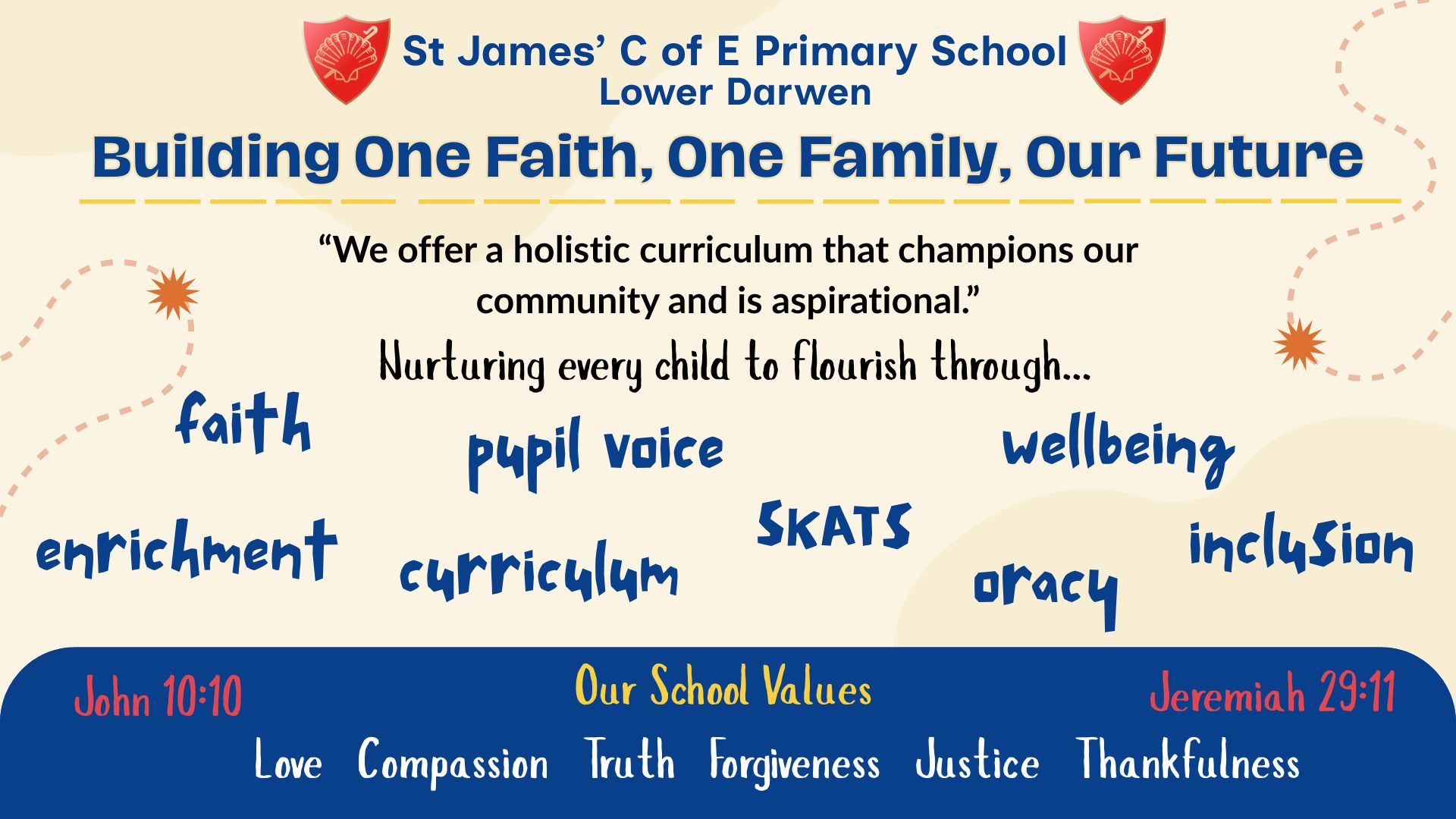
At St James’, our PSHE and RSHE curriculum equips pupils with the knowledge, skills and understanding they need to lead safe, healthy and fulfilling lives. Through our Kapow Primary curriculum, children learn how to care for their physical and mental health, build safe and respectful relationships, manage their emotions and make informed, responsible choices.
Rooted in our Christian values of love, thankfulness, truth, justice, compassion and fairness, pupils are encouraged to value themselves and others. They learn to express their feelings, ask questions in a safe and non-judgemental environment, consider different beliefs and viewpoints, and treat everyone with dignity and respect.
Our Christian ethos and SKATs underpin all that we do. Opportunities for discussion, reflection and real-life learning help pupils develop confidence, resilience, empathy and independence. Children are encouraged to reflect on how their choices affect themselves, other people and the wider world.
Guided by Jesus’ teaching, we aim to nurture the whole child—academically, socially, emotionally and spiritually—so that every pupil can flourish, become the best version of themselves and live life to the full. In doing so, PSHE and RSHE make an important contribution to our mission of:
“Building One Faith, One Family, Our Future.”
PSHE Overview:
At St James’, our PSHE and RSHE curriculum helps pupils develop the knowledge, skills and understanding they need to lead safe, healthy, confident and fulfilling lives. It prepares children to manage the opportunities, responsibilities and experiences they will encounter as they grow, both in school and in the wider world.
Through our Kapow Primary curriculum, pupils build their learning progressively across key areas, including families and relationships, health and wellbeing, safety, citizenship, economic wellbeing and growing and changing. Important knowledge and vocabulary are revisited through a spiral curriculum, enabling children to deepen their understanding and apply their learning to age-appropriate, real-life situations.
Lessons provide a safe, inclusive and non-judgemental environment in which pupils can explore feelings, ask questions and discuss different experiences, beliefs and viewpoints. High-quality oracy is central to PSHE and RSHE: children learn to express themselves clearly, listen carefully, explain their thinking and disagree respectfully.
Rooted in our Christian vision and values, the curriculum teaches pupils to value the dignity and worth of every person. Children are encouraged to show love, compassion, truth, justice and fairness; reflect on how their choices affect themselves and others; and develop healthy, respectful relationships. Our SKATs further support pupils to become reflective, resourceful and collaborative learners.
By the time pupils leave St James’, we aim for them to understand how to care for their physical and mental wellbeing, recognise safe and unsafe situations, seek help when needed, build positive relationships and make informed, responsible choices. Through PSHE and RSHE, we nurture the whole child so that every pupil is prepared for life beyond school and empowered to flourish and live life to the full.
Where does PSHE begin at St James?
PSHE and RSHE begin in the Early Years, where children’s personal, social and emotional development is central to everything they do. Through the Kapow Primary curriculum, daily routines, purposeful play and positive relationships, children learn how to understand themselves, care for their bodies and build respectful relationships with others.
Children are supported to recognise and talk about their feelings, manage their emotions, develop independence and understand how their behaviour can affect others. They learn to cooperate, take turns, resolve simple disagreements and recognise the importance of kindness, fairness and respect.
Age-appropriate learning also helps children identify trusted adults, understand personal boundaries, follow rules that keep them safe and begin to make healthy choices. Stories, role play, discussions and practical experiences allow children to ask questions and explore different families, cultures and experiences within a safe and inclusive environment.
These early foundations help children develop the confidence, resilience and self-awareness needed to form positive relationships, keep themselves safe and flourish as they progress through school.
2026/2027
Meet our wonderful peer mentors
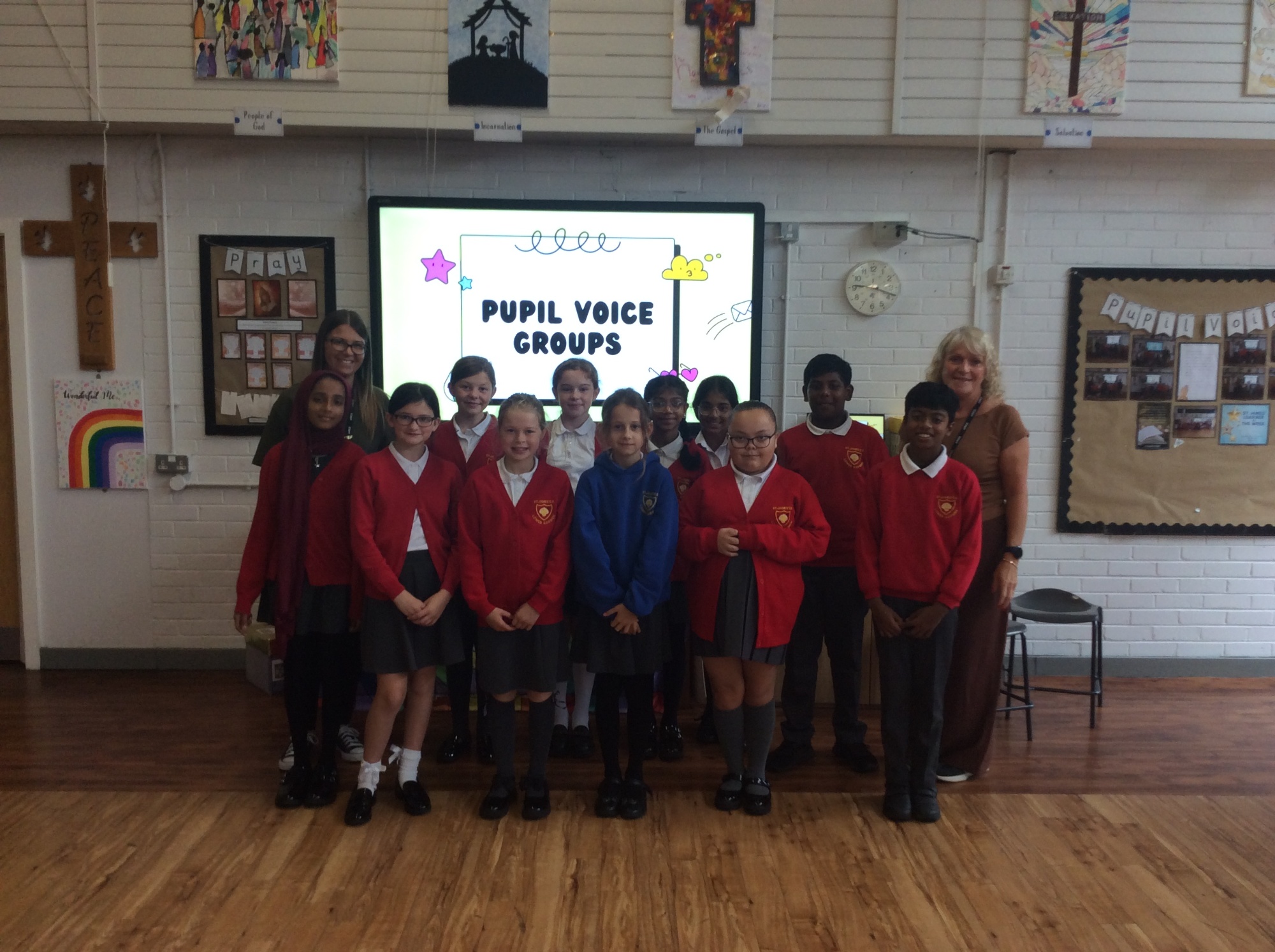
Our Peer Mentors help to make St James’ a happy, caring school where everyone feels loved, listened to and valued. They offer a friendly face on the playground, listen to others and help children find support when they need it. They work with Miss Bryan and Mrs Jacques to promote mental health and wellbeing across school, develop their mentoring skills and plan activities and worship that encourage kindness, friendship and inclusion.
Each half term, our Peer Mentors are paired with a peer mentee. They spend time together eating lunch and playing games, building friendships and helping children feel included.
Our Peer Mentors also raise awareness of mental health and wellbeing through pupil-led activities and collective worship.
Through their role, our Peer Mentors develop their confidence and leadership skills while putting our Christian values of love and compassion into action.
World Mental Health Day
💛 World Mental Health Day at St James’ 💛
On Thursday, our school family celebrated Hello Yellow Day by wearing something yellow and taking time to think about looking after our minds and caring for one another. 🌼
Our wonderful Peer Mentors led a special worship about recognising our feelings, being caring listeners and knowing who we can turn to for support. They also led us through a calming breathing exercise, reminding us that nobody should feel alone with their feelings. 💛
Throughout the day, each class joined in with ‘Take 10 for your mind’, spending ten minutes doing something positive for their wellbeing. 🧠✨
A big thank you to our Peer Mentors for sharing such an important message. Together, we can help everyone in our school family feel loved, listened to and valued. 💛
.jpg?v=1792896139)


Useful Links
-
BBC Bitesize
A range of age-appropriate videos, games and activities to support learning about feelings, relationships, health and wellbeing. -
NSPCC
Support for children and families on keeping safe, including guidance on speaking out and staying safe online. -
Childline
A safe space for children to get advice and support about anything they may be worried about. -
Young Minds
Resources to support children’s mental health and wellbeing, including advice for managing feelings and worries. -
Thinkuknow
Age-appropriate online safety resources to help children stay safe when using the internet. -
NHS
Reliable health advice for families, including guidance on healthy lifestyles, sleep and wellbeing.
These resources are most effective when used alongside open conversations at home. Talking regularly about feelings, friendships and safety helps children build confidence and make positive choices.