St James’ C of E Primary School Lower Darwen
Music
Welcome to the Music area of our website!
The subject leader for Music at St James' is Miss Smith.
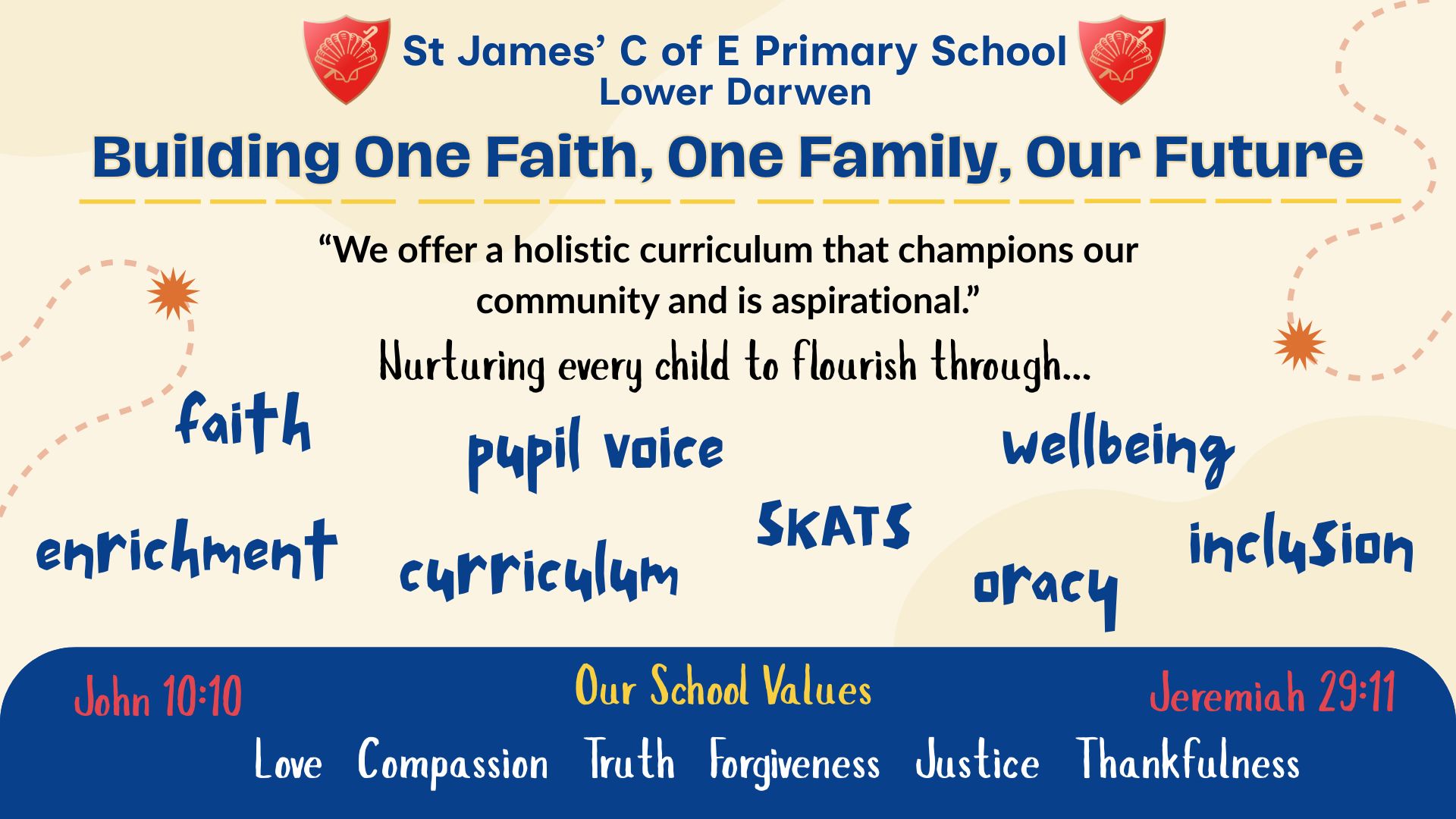
Our Christian Vision for Music:
Music allows children within our school to flourish and develop their spirituality. We listen to a range of music styles and genres, giving the children the opportunity to form their own opinions based on what they’ve heard. Children enjoy music lessons, with movement and laughter often accompanying the activities. We have various wider opportunities such as the choir and music lessons to allow children to further progress their talents should they wish to. Music allows children of all abilities and backgrounds to shine and is something which can be enjoyed by all. Children perform to each other, other classes, their families and the wider community. Music is celebrated as a common ground from all walks of life. We explore music from different cultures and time periods, prompting discussion into other countries and cultures. This develops our children’s experiences and appreciation for others, both of which will better prepare them for living in such a wonderful, multicultural world. Children study the context of the songs they learn, which gives examples of how music can be used as an outlet for feelings all across the spectrum, from joy to pain to anger. Exploring this and having the opportunity to do the same can create a greater sense of self for children.
Subject Overview:
We use Sing Up to support out teaching of Music at St James'. Within our lessons, we listen to various examples of the style of music we are studying and respond by asking and answering questions, giving our opinions, drawing comparisons with other songs and styles. We acquire a wide range of skills and knowledge and rehearse these in a variety of ways including: singing, playing instruments, improvisation and composition. As the children move through school, they build upon their skills and knowledge. A very important part of our learning is performing and sharing, as it helps us build confidence and also show off all the skills and knowledge we have learnt.
Where Does Music Begin at St James'?
Reception follow the EYFS framework, which is structured very differently to the national curriculum. It is organised across seven areas of learning rather than subject areas. The most relevant areas of learning for Music are: Communication and Language, Physical Development and Expressive Arts and Design.
In EYFS, Music is taught through exploration, curiosity and first-hand experiences that help children make sense of the world around them. Pupils begin to develop an understanding of their immediate environment through play, outdoor learning, listening to music, taking part in worship and assemblies and discussion. Children are encouraged to: listen to and learn a wide range of rhymes, poems and songs, respond to what they have heard and play instruments with increasing control,
Through meaningful experiences and rich vocabulary, children are encouraged to ask questions, notice similarities and differences, and develop an awareness of people, places and communities beyond their own. Music in EYFS lays the foundations for children to become inquisitive, observant and respectful global citizens.


